Category:
Game Dev
Date:

When I first started working on this project, I knew I wanted to create something fun.
The brief revolved around mental wellness and the idea of “Where Healing Meets Fun,” but I did not want to make a game that felt like a lesson disguised as entertainment. I wanted someone to be able to pick up a controller, start playing with their friends, laugh at the chaos on screen, and only gradually realise that everything happening in the game represents something deeper.
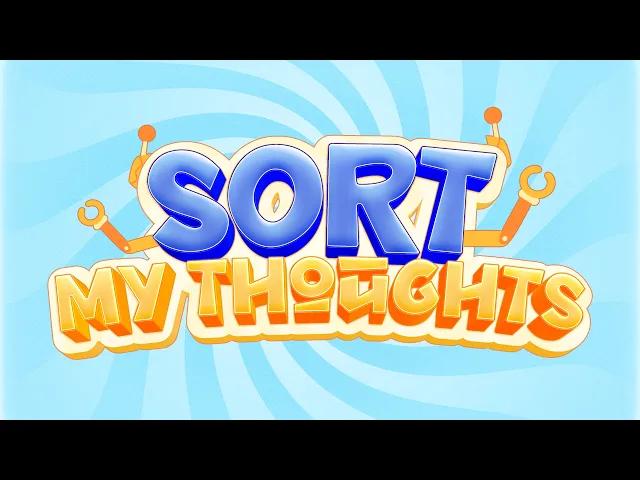
That idea eventually became Sort My Thoughts.
It is a local multiplayer party game where players enter a symbolic place called the Mind Workshop. Thoughts continuously appear and travel through the workshop, and players have to grab them, recognise matching emotional patterns, pair them together, and sort them before everything becomes too overwhelming.
And when the thoughts start piling up?
That is when the Clutter Monster appears.
What began as a fairly simple object-sorting game eventually turned into a project about mental clutter, emotional recognition, competition, chaos, and the feeling of gradually bringing order back into your mind.
Watch Sort My Thoughts in Action
For my game presentation, I created a short narrated demonstration showing the complete player experience and some of the features that changed the most during development.
In the video, I walk through the game from the opening screen and player selection to the introductory story, tutorial, multiplayer gameplay, Thought Card matching, scoring, Clutter Monster encounters, environmental changes, sound design, gameplay settings, and final winner sequence.
Rather than only showing the finished game and a playtest with my friends, I also wanted the demonstration to explain why certain systems exist and how they developed during prototyping.
It Started as a Much Simpler Game
The earliest version of the game was actually much simpler than the final idea.
The basic mechanic was already there.
Players controlled hands, objects moved through the environment, and the objective was to find two objects with matching patterns. Once they matched, players could carry the combined object into their basket and earn a point.
The basic loop was:
Grab. Match. Carry. Drop. Score.
And mechanically, it worked.
It was competitive. It was fast. It became chaotic when several players were moving around at once.
But something was missing.
The game could have existed without the mental wellness theme at all.
That became the first major problem I had to solve.
From “Trash My Thoughts” to “Sort My Thoughts”
At one stage, I was calling the project Trash My Thoughts.
The idea made sense mechanically. Players would deal with thoughts and remove them from the play area.
But the more I thought about that title, the less comfortable I became with the message behind it.
Calling the game Trash My Thoughts suggested that difficult thoughts were something bad that needed to be thrown away.
That was almost the opposite of what I wanted the project to communicate.
So I changed the question.
Instead of asking:
How do I get rid of these thoughts?
I started thinking:
What if the game was about recognising and organising them?
That small change completely shifted the meaning of the project.
The objects became Thought Cards.
Their visual patterns became representations of different emotional states.
When two matching Thought Cards are brought together, they become a Paired Thought.
Players then carry that paired thought into their basket.
So the interaction changed conceptually from:
Find → Remove → Throw Away
to:
Notice → Recognise → Match → Organise
That was the point when Sort My Thoughts really started becoming its own game.
Welcome to the Mind Workshop
I wanted the thought-sorting mechanic to take place somewhere more interesting than a normal room.
That led to the idea of the Mind Workshop.
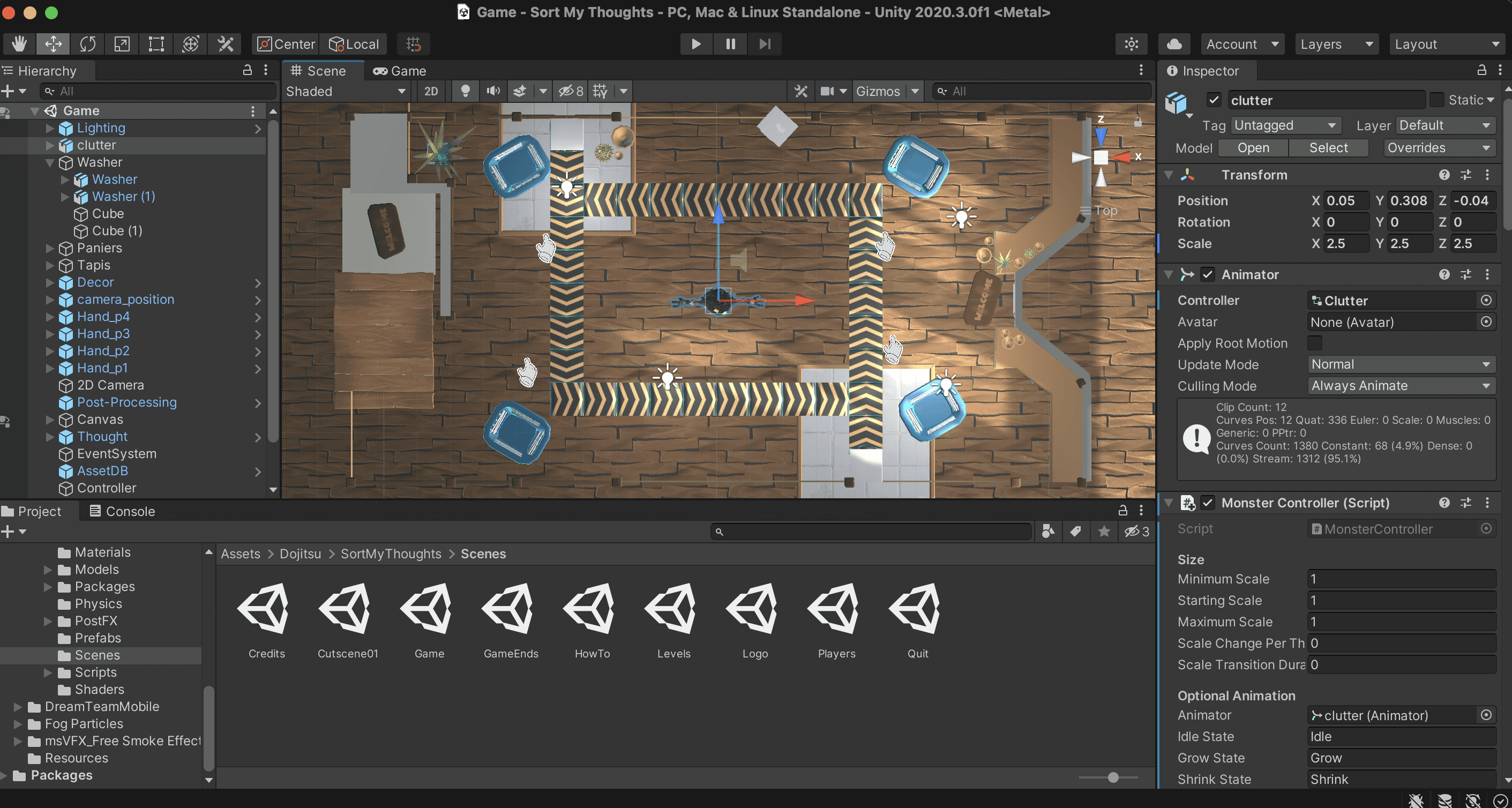
I imagined the mind as a strange little processing factory where thoughts are constantly being produced, moved around, examined, and organised.
The environment contains machines, conveyor belts, baskets, workshop props, lights, and fog.
At the centre of the system is the Thought Distributor, which continuously produces new Thought Cards.
The conveyor belts then carry those thoughts into the play area.
I liked this metaphor because thoughts rarely arrive one at a time in real life.
Sometimes they just keep coming.
One unfinished assignment reminds you of another deadline. A message reminds you that you forgot to reply to someone. That reminds you about something else.
Suddenly, your brain feels like a conveyor belt that refuses to stop.
That is the feeling I wanted the Mind Workshop to represent.
Becoming a Mindkeeper
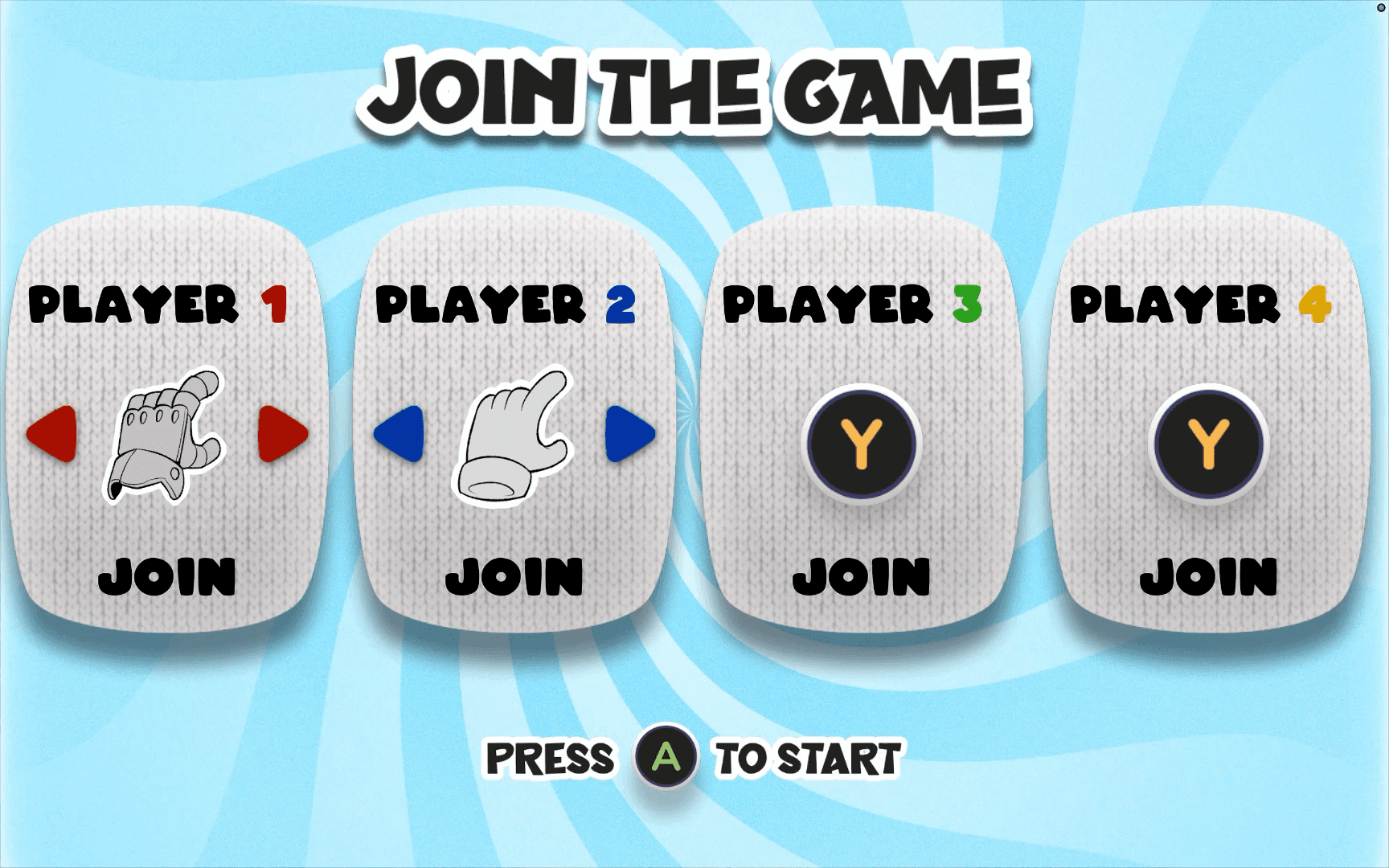
Instead of giving players traditional human characters, I represented them using controllable hands.
Within the game’s world, the players are called Mindkeepers.
Their job is simple:
find the thoughts, recognise their patterns, and keep the workshop under control.
Using hands also made the interaction feel direct.
Players are not giving instructions to another character.
They are physically reaching into the environment and moving thoughts themselves.
Because the game supports several players at once, readability quickly became a problem during development. When four hands, several Thought Cards, fog, particles, baskets, and a monster are all visible at the same time, it becomes surprisingly easy to lose track of yourself.
To solve this, I gave each player a coloured trail:
Player 1 – Red
Player 2 – Blue
Player 3 – Green
Player 4 – Yellow
It was a relatively small feature, but it made a huge difference during multiplayer gameplay.
The Core of the Game

Once the game begins, thoughts continuously enter the Mind Workshop.
Every Thought Card carries a visual emotional pattern.
I have to grab one, find another with the same pattern, and bring the two together.
When they match, they merge into a Paired Thought.
That Paired Thought can then be carried into my basket.
If I sort it successfully:
+1 point.
The complete gameplay loop became:
Catch → Match → Sort → Score → Clear the Mind
I deliberately kept that loop simple.
This game is designed to be played in an event environment, so someone should not need ten minutes of explanation before they can participate.
A player should be able to look at what somebody else is doing and understand the basics almost immediately.
Then I Created the Clutter Monster
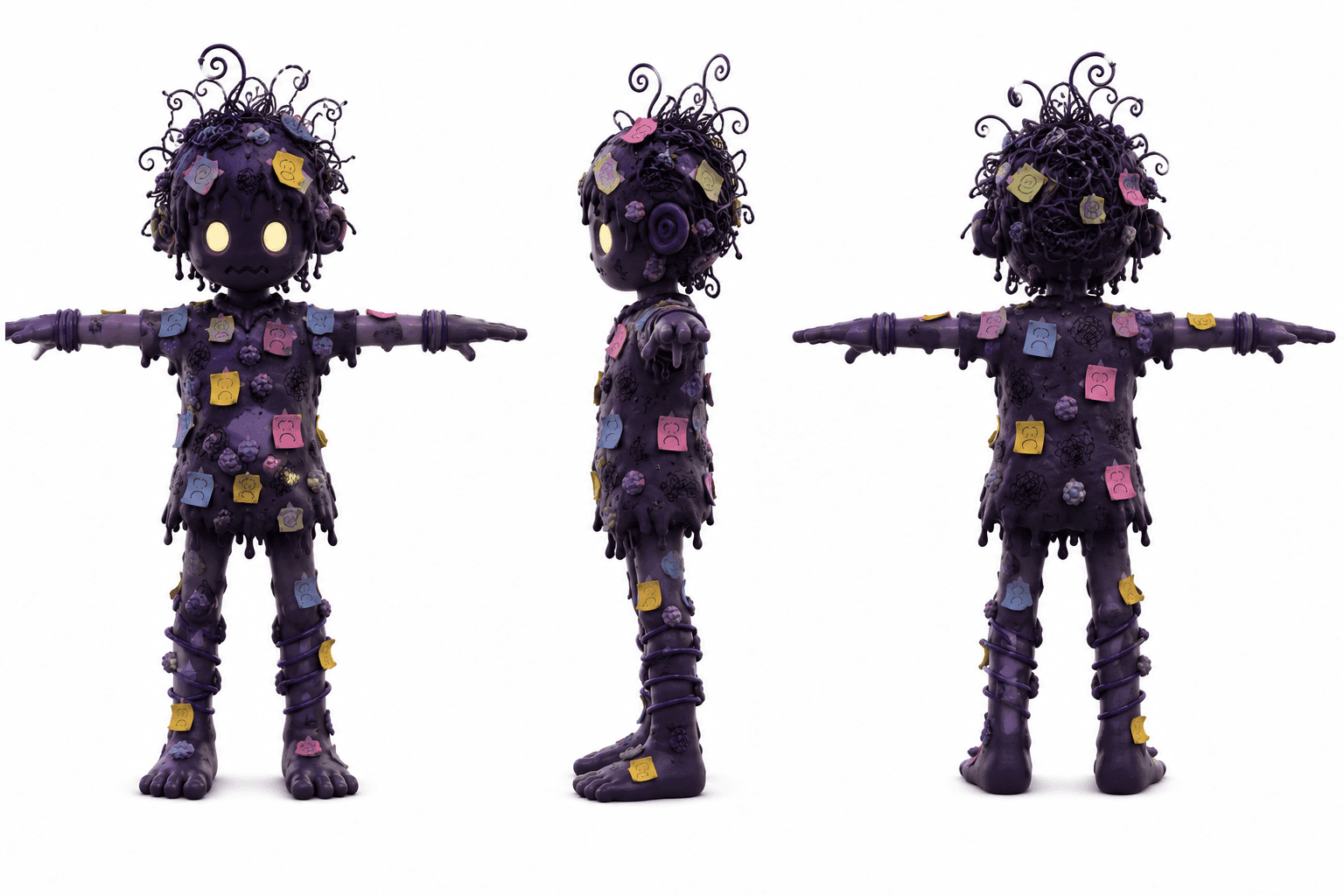
The game still needed something that represented what happens when thoughts are left unmanaged.
That idea became the Clutter Monster.
The monster represents mental clutter becoming overwhelming.
My first approach was much more complicated than the version that eventually worked.
Originally, I wanted the monster to behave more like a traditional enemy.
It would appear elsewhere in the level, walk across the workshop, navigate around objects and conveyor belts, reach a player’s basket, steal a thought, and then leave.
On paper, that sounded much better.
In practice, it caused problem after problem.
The monster could behave unpredictably around conveyor belts.
Its movement sometimes looked awkward.
It could appear too often.
Sometimes it targeted the same player repeatedly.
Other times the entire sequence happened so quickly that nobody understood what had just happened.
I had built a technically more complicated enemy, but not necessarily a better game mechanic.
That became one of the biggest lessons I took from the project.
Making the Monster Simpler Made It Better
Eventually, I stopped thinking about the Clutter Monster as an enemy that needed sophisticated navigation.
I asked myself what its actual purpose was.
The answer was simple:
It needed to represent pressure.
So I redesigned the system around that idea.
The monster now behaves more like a controlled gameplay event.
It does not immediately appear when the round starts.
It waits until players have had time to understand the game.
It does not attack players who have nothing to lose.
It has a cooldown so it cannot constantly interrupt gameplay.
It can avoid repeatedly targeting the same player when other targets are available.
And instead of travelling across the entire level, it can appear closer to the relevant basket.
That one decision removed a large amount of unnecessary technical complexity.
Now, when the monster arrives, the important part is not how far it walked.
The important part is that everyone immediately knows:
Something has changed.
Making the Monster Feel Like an Event
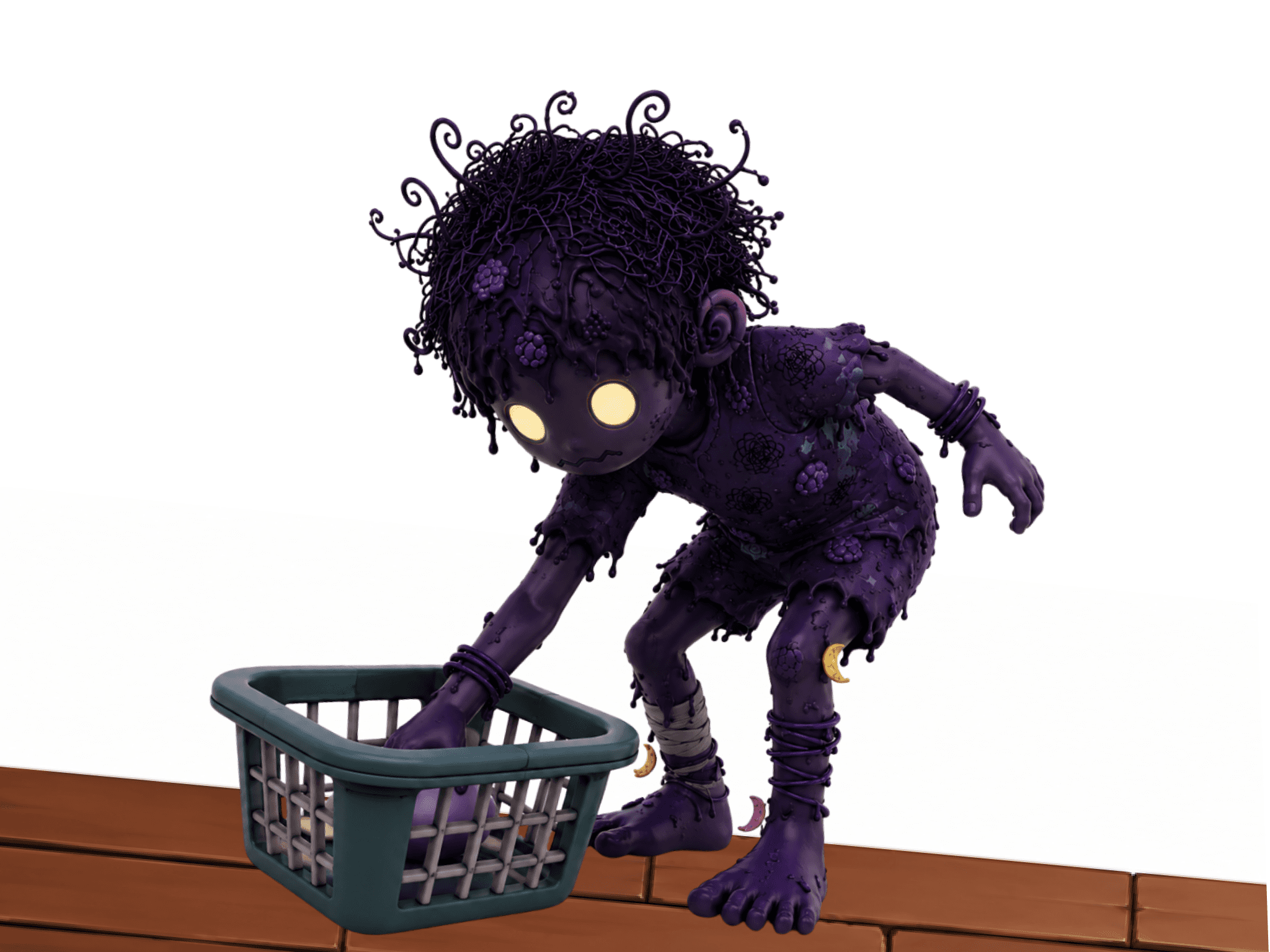
Once the monster behaviour was working, I started adding layers of feedback around it.
When the Clutter Monster appears:
Smoke fills the area.
Its laugh plays.
The normal gameplay music changes.
The controller vibrates.
The camera shakes.
The monster animation begins.
A player’s score can be reduced.
A large
-1indicator appears.
When the monster leaves, the game returns to its normal rhythm.
This helped me understand another important part of game design:
players should not have to rely on a single piece of feedback.
If someone happens to be looking at the opposite side of the screen, they might miss the monster animation.
But they can hear the laugh.
They can feel their controller vibrate.
They can hear the music change.
They can see the camera react.
Multiple signals make the event much harder to miss.
Making the Mind React to the Player
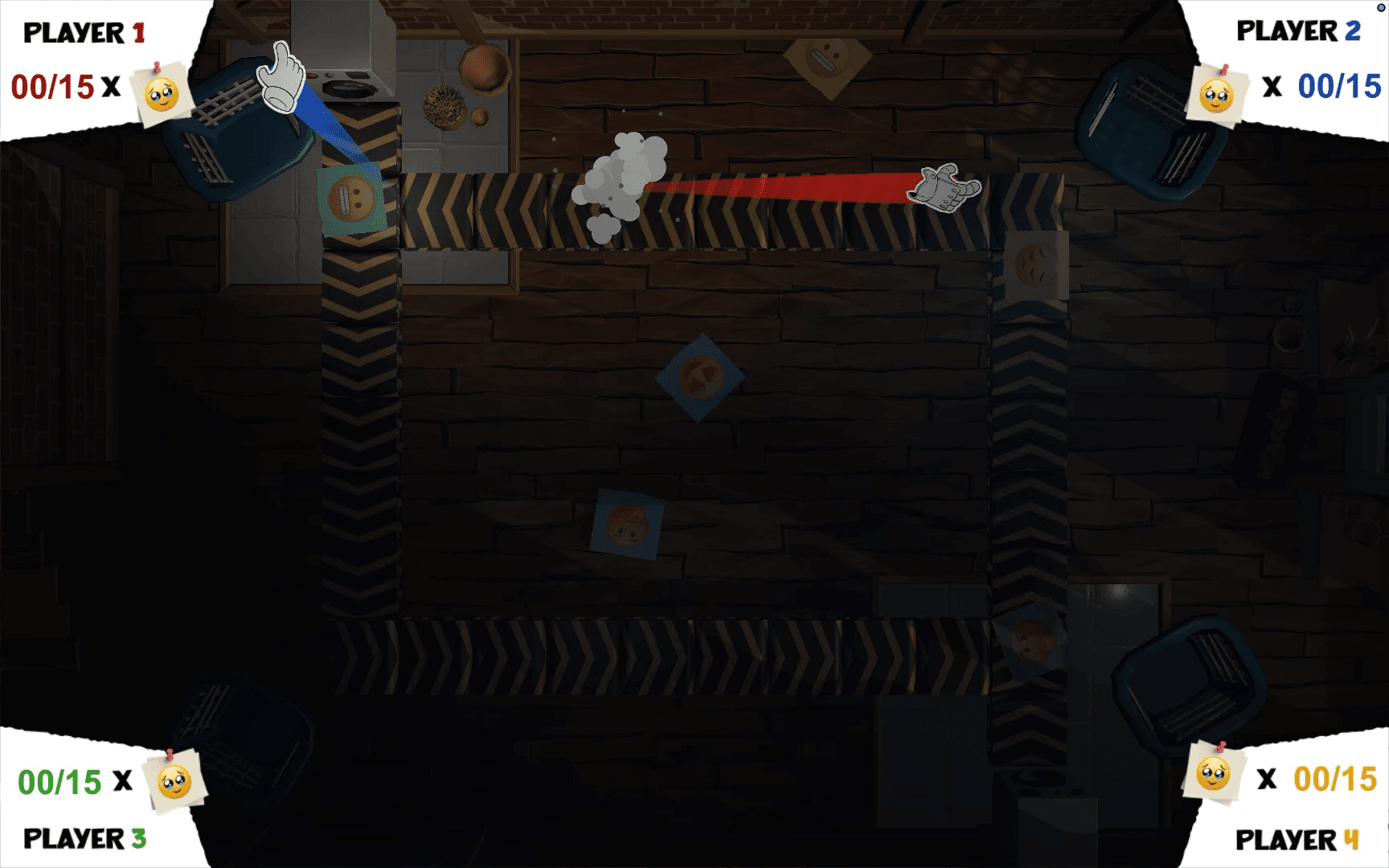
vs
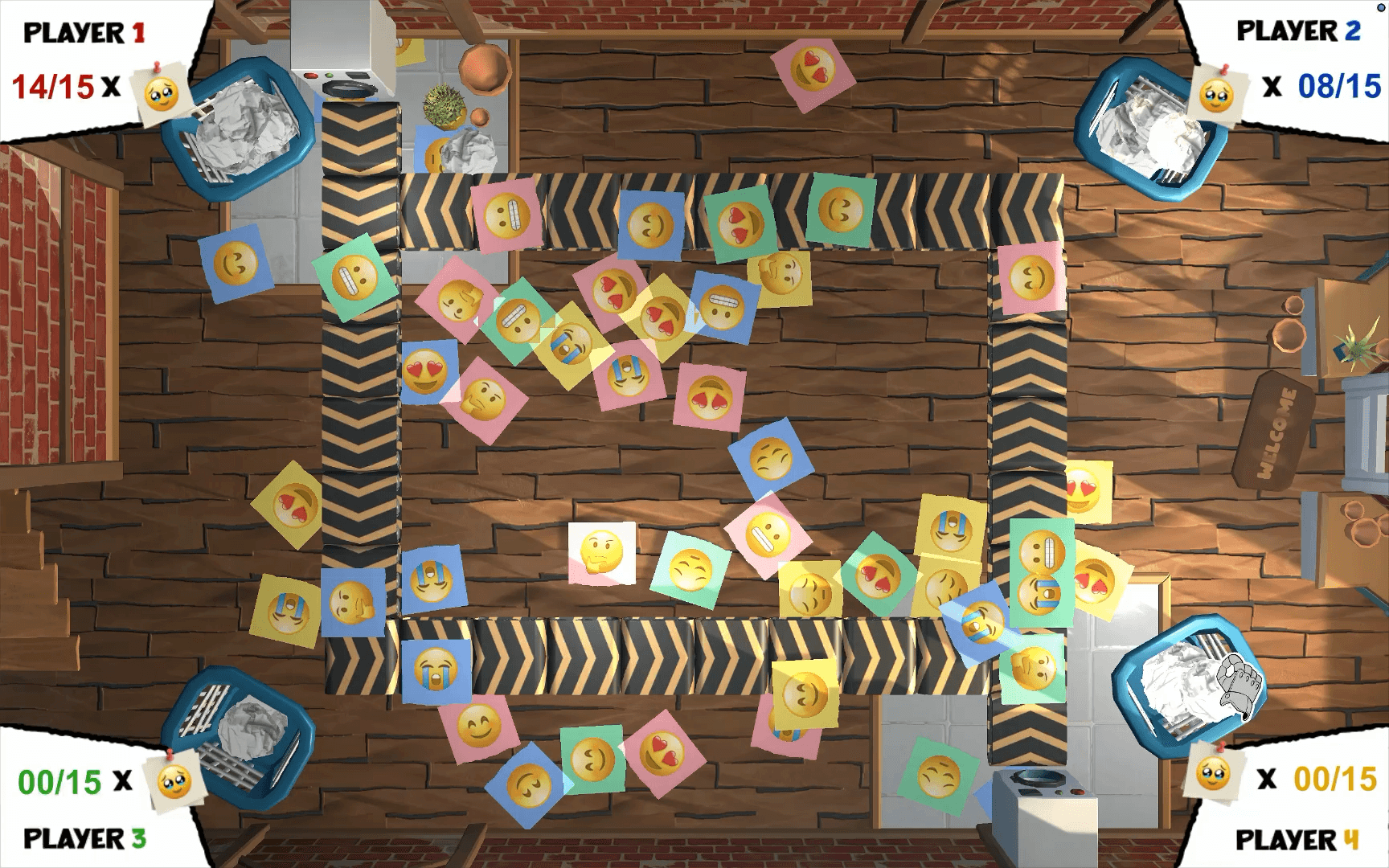
One feature I particularly wanted was for the environment itself to respond to how well the players were doing.
Initially, I experimented with simply increasing the lighting as the score increased.
Technically, it worked.
Visually, it was barely noticeable.
So I pushed the idea further.
The environment began using a combination of:
Darkness
Fog
Reactive lighting
Fog-of-war style visibility
Player trails
Monster effects
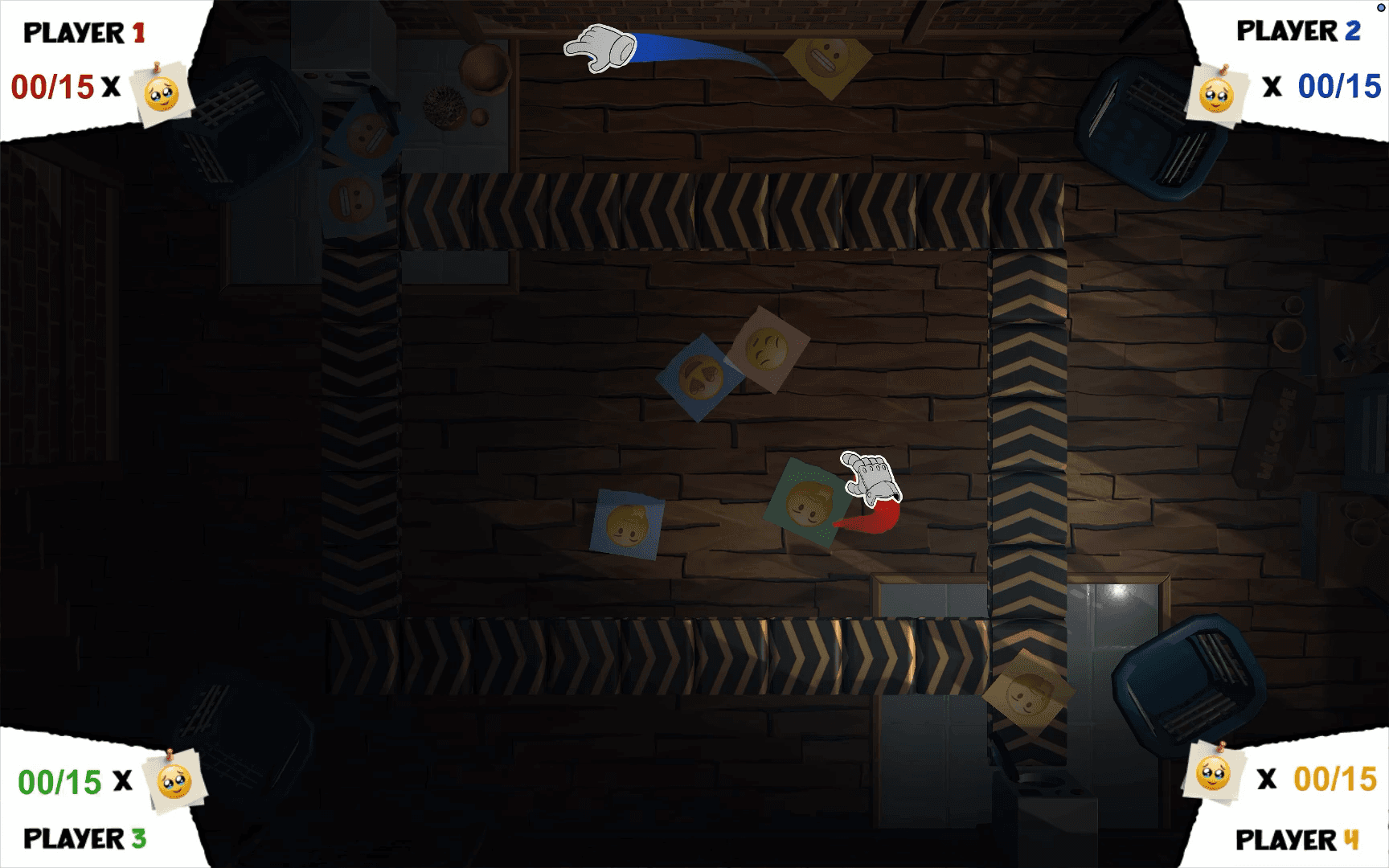
At lower progress, the workshop feels darker and more uncertain.
As thoughts are successfully sorted, it gradually becomes brighter and clearer.
The idea is simple:
Clutter feels unclear.
Organisation creates clarity.
I wanted the player to experience that idea instead of reading a message explaining it.
When Atmosphere Started Hurting the Game
There was another problem, though.
Fog looks great until nobody can see what they are doing.
During testing, I realised that I could make the environment look more dramatic by increasing the darkness and fog, but I was also making the game harder to play for the wrong reason.
Players could lose track of:
Their hands
Thought Cards
Their baskets
Other players
That led to another rule I ended up following during development:
Atmosphere should support gameplay, not hide it.
So I kept visibility stronger around the areas that players immediately interact with and used colour trails to maintain readability.
That compromise worked much better.
Difficulty Turned Out to Be About Speed
Another thing I discovered was that I did not really need traditional difficulty settings.
There are no enemies that need extra health.
Players do not have health bars.
There are no stronger weapons or tougher bosses.
What actually makes Sort My Thoughts difficult is how quickly everything happens.
If thoughts appear too quickly, the workshop becomes chaotic.
If the Clutter Monster appears constantly, the game becomes frustrating.
If everything happens too slowly, there is no pressure.
So instead of adding a simple:
Easy / Normal / Hard
menu, I added two separate settings:
Thought Spawn Speed
This controls how quickly new Thought Cards appear.
Monster Spawn Speed
This controls how often the Clutter Monster can interfere.
That gave me much more control over the experience.
It also makes sense for an event game because different groups can play at different speeds without changing the main rules.
Giving the Game a Beginning

Another issue with the early prototype was that players were thrown directly into the mechanics.
They could understand what to do.
They could not necessarily understand why they were doing it.
So I developed an introductory cutscene.
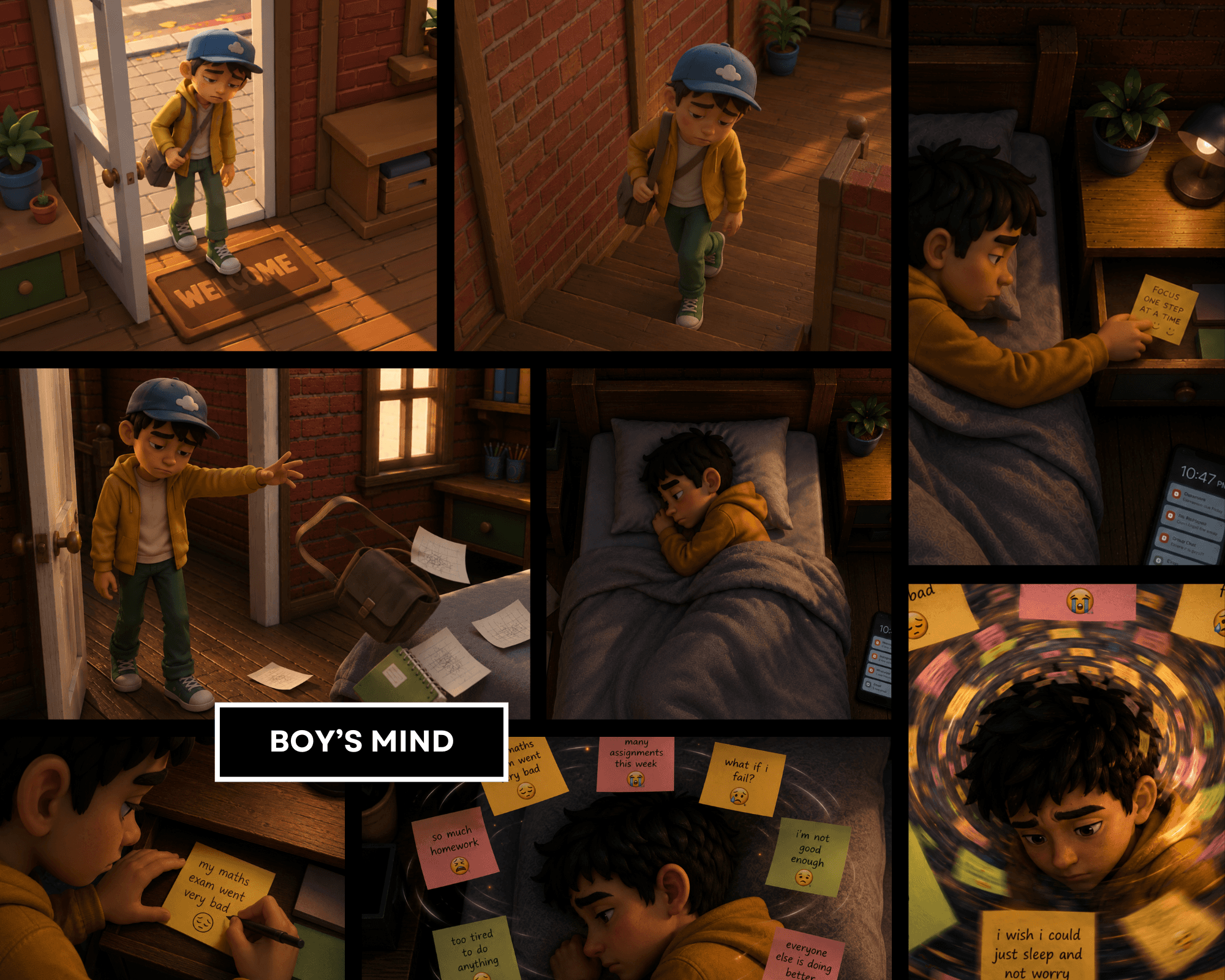
The story begins after a long day.
There is unfinished work.
Unread messages.
Responsibilities waiting.
One thought appears.
Then another.
Then another.
The story eventually transitions inside the mind, where the Mind Workshop comes alive and the player is introduced to the idea of accumulating thoughts and the Clutter Monster.
After the cutscene, a visual tutorial teaches the player how to grab, drag, match, sort, and respond to the monster.
This gave me a much cleaner structure:
Story → Meaning → Tutorial → Play
instead of:
Start → Chaos → Figure It Out
Designing the Game for More Than One Pair of Hands
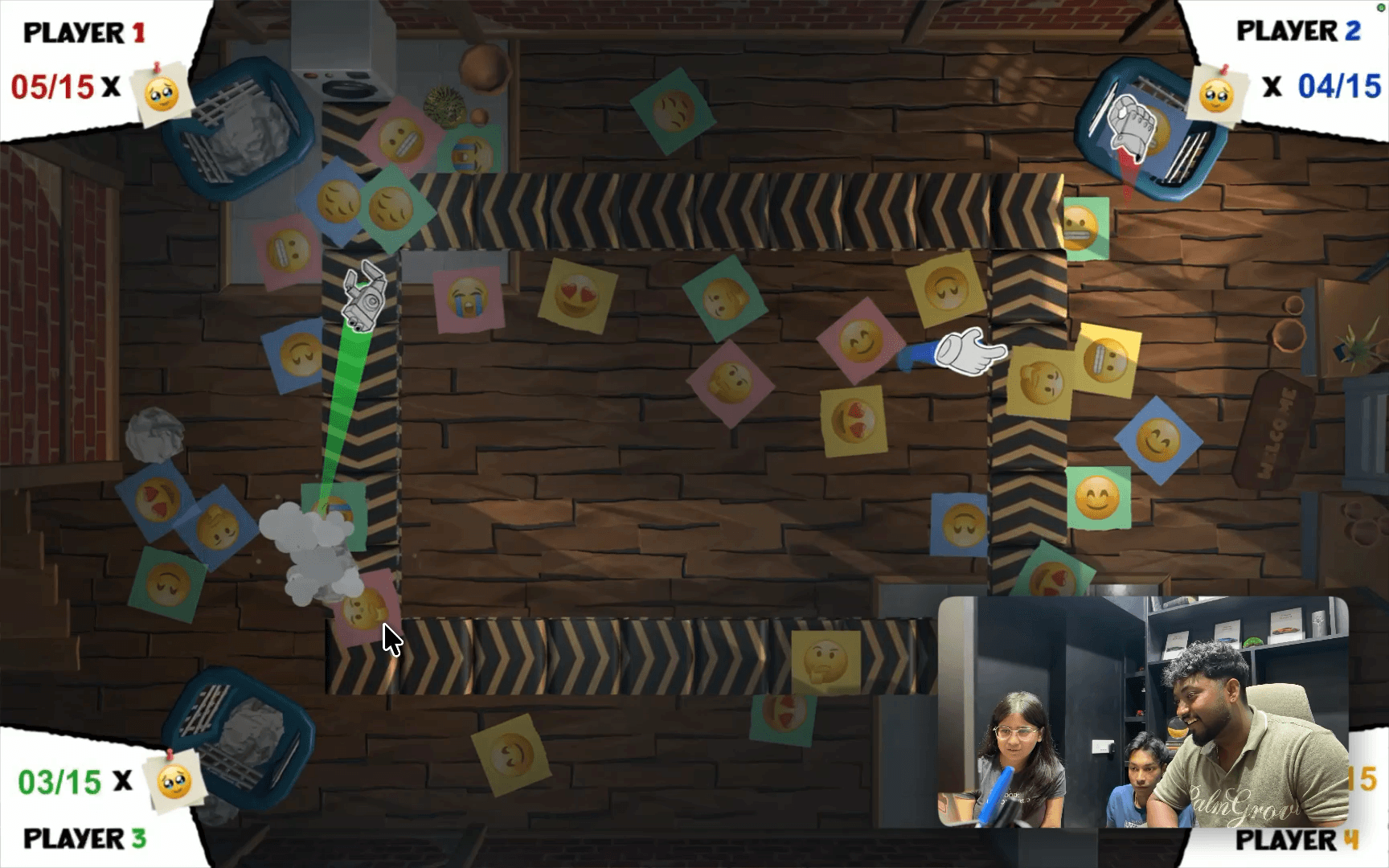
Multiplayer was one of the things that made the project fun, but it also caused many of the design problems.
Four players means four hands.
Four trails.
Several Thought Cards.
Four baskets.
Score popups.
Particles.
Fog.
Monster effects.
And everyone is trying to move at the same time.
That forced me to think much more carefully about visual hierarchy.
Some things had to stay underneath other things.
Some effects had to disappear quickly.
Player trails had to sit behind the hands.
Point indicators had to be large enough to notice without covering the gameplay.
The scoreboard had to remain visible without becoming the main thing players looked at.
A surprising amount of the final polish came from simply asking:
What does the player need to notice right now?
The Mental Wellness Theme Became Part of the Mechanics
What I like most about the final version is that the mental wellness theme is no longer only explained through the story.
It exists throughout the actual systems.
The Thought Cards represent emotions and mental events.
The conveyor belts represent thoughts continuing to arrive.
The Mindkeepers represent active awareness.
The matching mechanic represents recognising repeated emotional patterns.
The baskets represent organised thoughts.
The fog represents uncertainty and mental noise.
The light represents clarity.
And the Clutter Monster represents what happens when everything begins to feel like too much.
None of these individually tells the player what to think.
Together, however, they create the emotional language of the game.
Some of My Key Visuals
The Mind Workshop
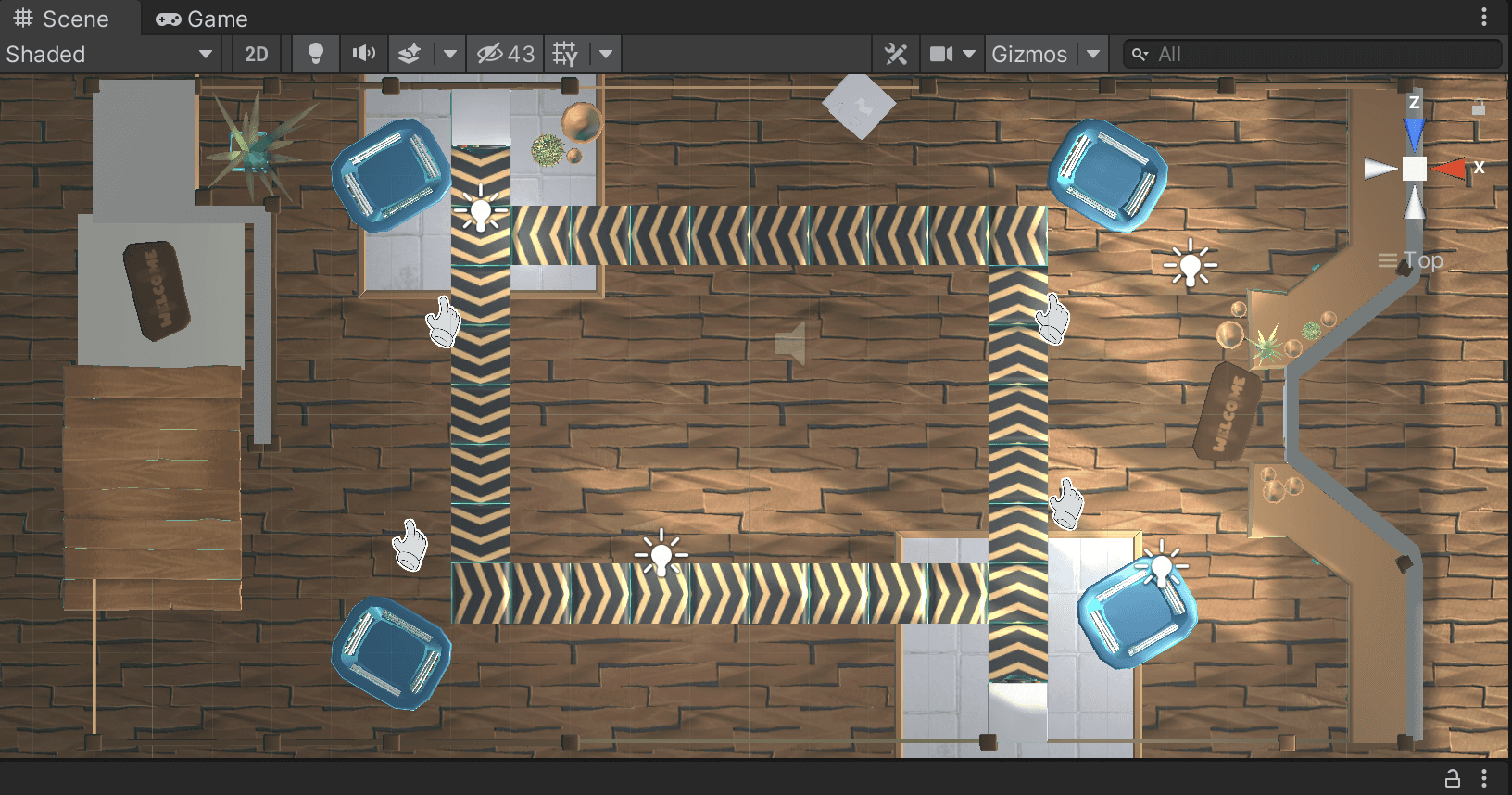
The main gameplay environment where thoughts are produced, moved, recognised, and sorted.
Thought Cards
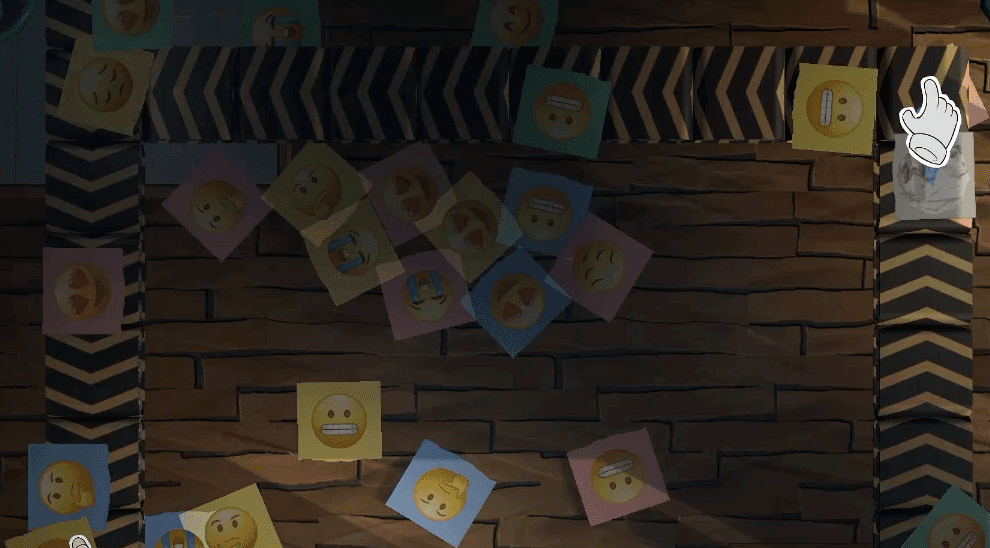
The central interactive objects carrying different emotional patterns.
The Mindkeepers
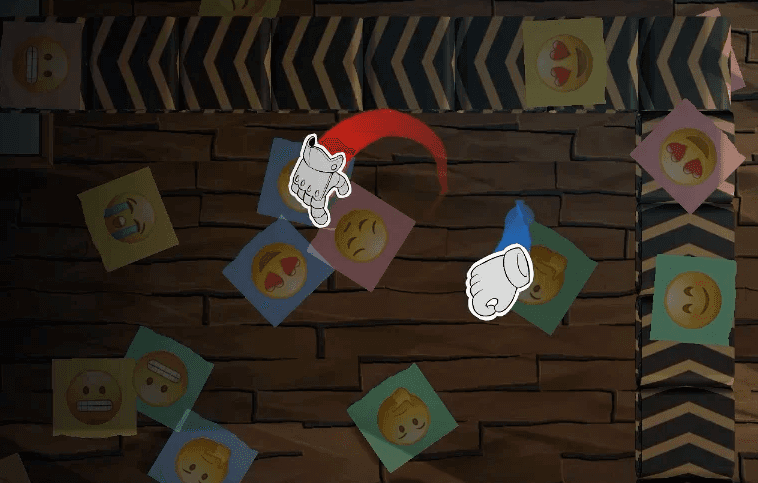
The four player-controlled hands responsible for keeping the workshop organised.
The Clutter Monster
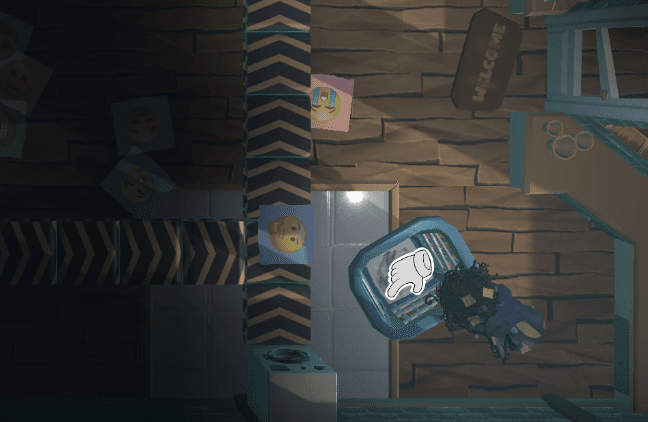
The visual representation of unmanaged thoughts and mental overload.
Clutter to Clarity
Mind is Dark in the Start
After
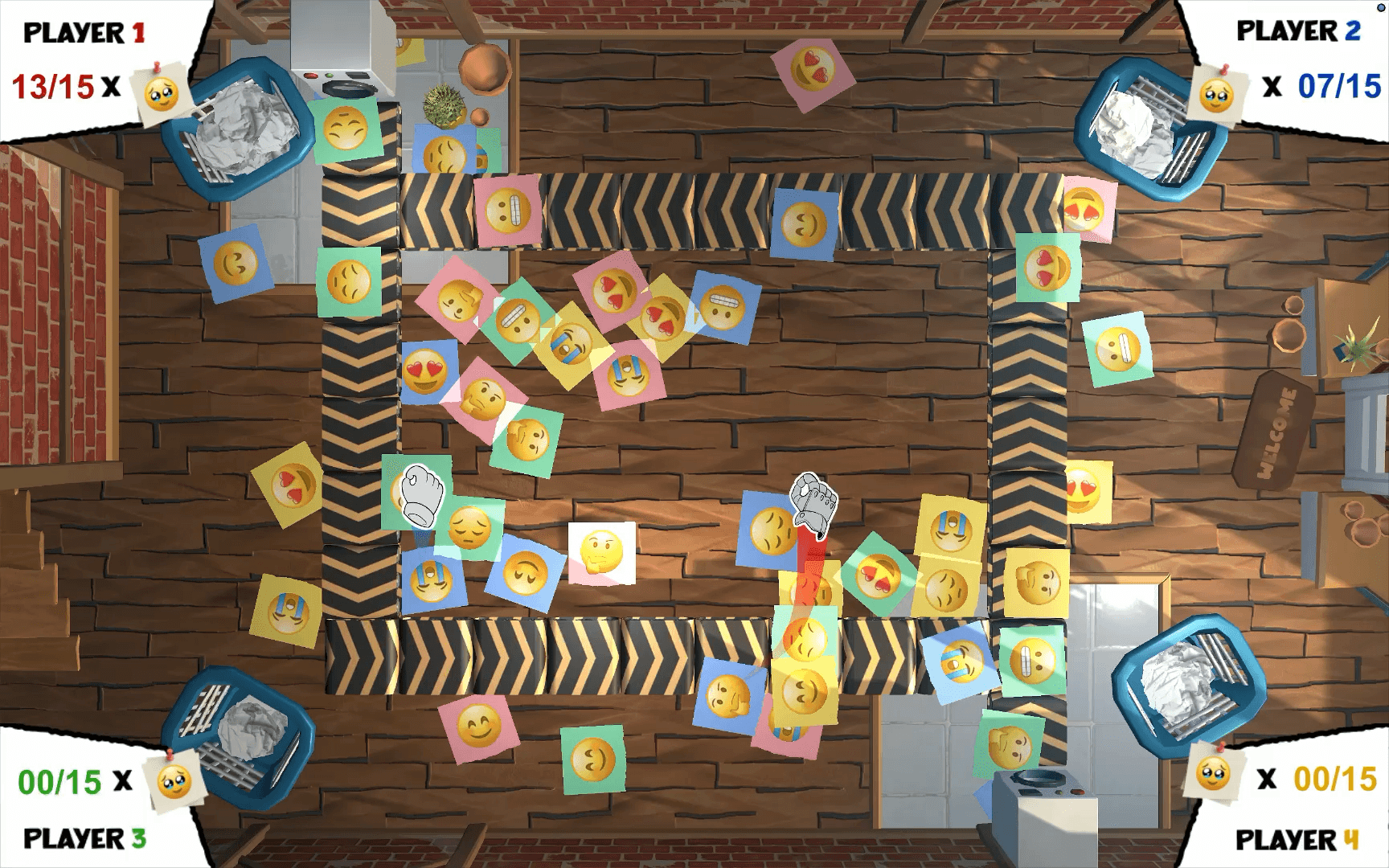
The environment becomes clearer as players successfully organise thoughts.
Play Sort My Thoughts
Web Game Link: https://dojitsu.itch.io/sort-my-thoughts
The game is designed primarily for local multiplayer using gamepads/controllers on PC/Desktop. If possible, please test on downloaded PC versions so stable experience.